
Essex County Parole Versus Probation
Parole and probation can both follow a person into the community, but they begin in different ways. Parole is conditional release from a sentence under Massachusetts Parole Board jurisdiction. Probation is a sentence or disposition ordered by a Trial Court judge. Someone may leave Middleton Jail & House of Correction to probation without ever being granted parole. A person released on parole can remain under Board jurisdiction even though physical custody has ended.
The distinction controls where to verify the record. The Board publishes selected life-sentence decisions and hearing material, but it does not publish a person-by-person roster of everyone on parole. Probation is found in the originating criminal case, not in a statewide public probation roster. The Office of the Commissioner of Probation does not offer a public name search for current supervisees.
Custody status and supervision status can also overlap in ways that confuse a quick search. A parole revocation may return someone to custody. A probation violation may lead to a new detention order. Home confinement may place a person outside a secure building while restrictions remain active. Each status needs its own dated source. The ECSD entry answers what happened to county custody, while the Board or court answers what legal supervision followed.
| Question | Parole | Probation |
|---|---|---|
| Who creates it? | Massachusetts Parole Board | Trial Court judge |
| Key record | Decision and authorized Board record | Docket, judgment, and probation order |
| Public roster? | No person-specific roster | No public name-based roster |
| How it ends | Termination or discharge under Board authority | Court termination or completion |
- Parole
- Conditional community release while the Board retains jurisdiction.
- Probation
- Court supervision imposed through a criminal disposition.
- Discharge
- The formal end of a custody or supervision status.
- Absconder
- A person alleged to have stopped reporting or left supervision without permission.
Verify Essex County Release Supervision
Start with the release authority, not a general web search. The ECSD release record can state a release type or that supervision follows, while the docket gives the court's legal action. For parole, the Massachusetts Parole Board supplies the decision and later Board action. For probation, the court clerk supplies the official disposition and orders. The Essex County released-inmate search path explains how to pair those sources with the custody release record.
- Identify the former custodian. Decide whether the person left ECSD, MA DOC, federal custody, or another county.
- Read the release paper or docket. Look for parole, probation, suspended sentence, violation, warrant, or termination entries.
- For parole, check Board material. Search the Life Sentence Record of Decisions when a life sentence applies.
- Request the individual record correctly. The Board's parolee-record process generally requires authorization for another person's file.
- For probation, use the clerk. Request the public docket, judgment, probation order, and later violation or termination entries.
- Confirm the office. Ask Board Central Office which region follows the approved release address.
Remote criminal access has limits. Essex cases often require an exact docket number. If the online record is incomplete, the courthouse clerk keeps the official public record. A docket can show that a judge authorized release and imposed probation, but ECSD or DOC records establish when physical release was processed.
Essex County Parole Record Limits
The Massachusetts Parole Board publishes useful but partial material. Its hearing hub links to calendars and decisions. Life-sentence and termination hearings are public. Institutional release, rescission, and revocation hearings at facilities are closed. Public decisions are concentrated in the life-sentence archive and indexed by year and last name. No equivalent public name-search archive exists for all non-life decisions.
A positive vote requires care. It can authorize release, yet planning, permit execution, postponement, or rescission may intervene. Revocation occurs after parole begins and can return a person to custody. Termination is an early end of supervision, not the first prison release. The decision history must be read in order.
The official person-specific parole route explains the authorization requirement.
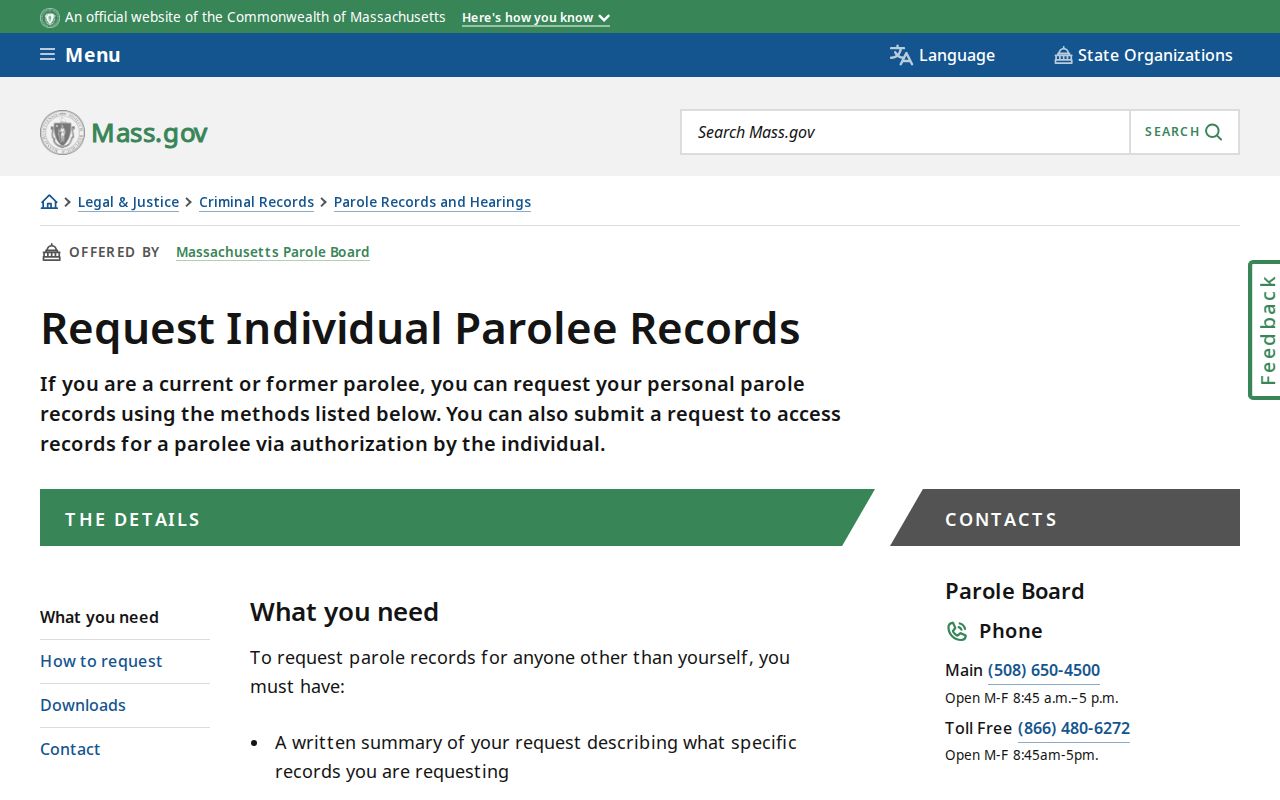
Identify the person and records sought. For another individual's file, expect the Board's Third Party Authorization/CORI Release and lawful redactions.
Note: A published vote shows Board action, while the DOC certificate or final release record best confirms that release occurred.
Essex County Parole Office Routing
Parole Region 3 is a useful local contact, but it is not an Essex-only roster. The office sits in Lynn. Assignment follows the approved release plan and residence. An Essex conviction may route elsewhere, while a person convicted in another county may live within Region 3. Central Office can identify the proper region.
Massachusetts Parole Region 3
20 Central Avenue, 6th FloorLynn, MA 01901
978-750-1900
Monday through Friday, 9 a.m. to 5 p.m.
Massachusetts Parole Board Central Office
12 Mercer RoadNatick, MA 01760
508-650-4500 or 866-480-6272
The official Region 3 listing confirms the Lynn office.
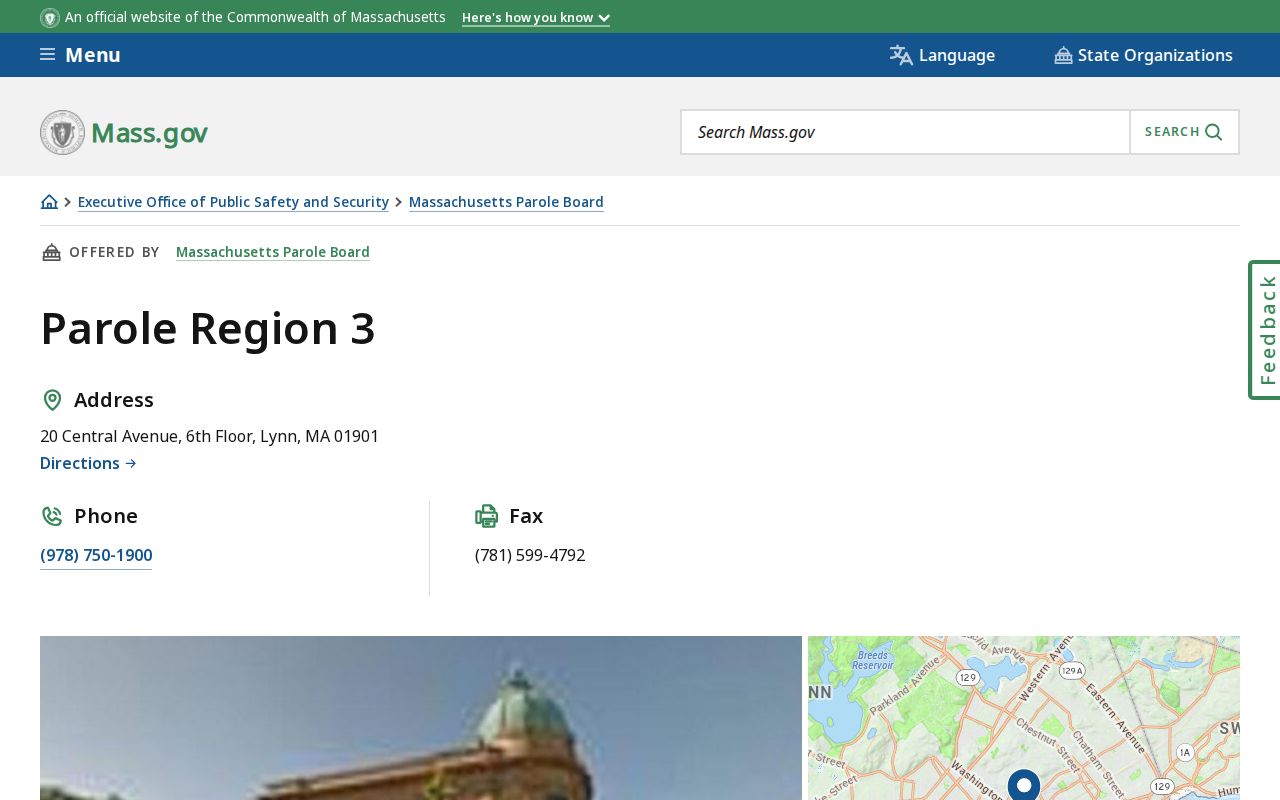
The listing supports routing, not a public status inquiry. Board guidance says a parolee reports to the designated office on release day, but an authorized record must confirm that event.
Essex County Probation Docket Route
Probation starts with a judicial order. The docket can show its term, violation events, extensions, revocation, or termination. Remote criminal searching generally depends on an exact docket number, so release papers, the mittimus, counsel, or the clerk may be needed first. A mittimus is the court document that directs the jailer to hold a person and links custody to the case.
Essex has a local routing detail. Superior Court's criminal protocol puts First Session in Salem, with trial sessions in Salem and Lawrence. Lawrence-supervised probation matters are ordinarily handled Wednesday afternoons in Lawrence. Salem matters route through First Session. District Court assignment turns on the municipality and division, not the county name alone. Use the Essex courthouse locator.
A violation may lead to a warrant, hearing, changed terms, or revocation. Read entries in sequence. An old probation order does not prove supervision remains active today. Obtain the later orders and final termination entry when current status matters.
Essex County Supervision Warrants
No official public Massachusetts parole-absconder database was found. The Board's Warrant and Apprehension Unit accepts information at 617-376-6269, and State Police Dispatch is 508-820-2121. Those are tip channels, not released-person search tools. The MA DOC Most Wanted page concerns DOC escapees and must not be treated as a parole roster.
For probation, a warrant or alleged violation may appear on the docket. For parole, an authorized Board record can show a warrant, revocation case, or later action. Conditions can address reporting, residence, travel, and case-specific programs, but only the order and supervising agency establish one person's terms.
Note: An absconder allegation signals an unresolved supervision issue; it does not turn an old release record into proof of current custody.
Essex County Release Support in Lynn
ECSD's Supporting Transitions and Reentry program, or STAR, operates community sites in Lynn and Lawrence. It offers case management, clinical and educational support, and links to services. Referrals may come from institutions, courts, probation, police, partners, participants, and families. Self-referrals are also accepted.
STAR can help after an Essex County release, but participation does not prove parole, probation, or a release date. Its Lynn co-location with Region 3 creates a distinct reentry and supervision hub, yet each record remains separate. Use the Board for parole, the court for probation, and ECSD or DOC for actual release.
Property After Essex County Release
Practical release tasks may remain after supervision starts. ECSD says a released person can retrieve account funds by calling 978-750-1900 extension 3402. Funds are released weekdays from 8 a.m. to 4 p.m. Property pickup at Middleton runs weekdays from 8 a.m. to 9 p.m.
The funds instructions and property instructions address separate tasks. Massachusetts General Laws chapter 127, section 3 requires jail and house-of-correction officials to record prisoner money and property and deliver it on discharge, subject to the statute.
Retrieval does not establish the kind or end date of supervision. Keep receipts and release papers because they may show the booking or docket number needed for a precise request.
When Essex County Supervision Ends
Physical release and legal discharge are different events. A parolee may reach sentence termination under Board authority. A probationer may complete the ordered term or receive a termination order. A parole termination decision is distinct from a release grant, while a probation termination entry is distinct from the jail's actual release date.
For parole, request the final Board action and DOC Certificate of Discharge/Release when applicable. For probation, obtain the docket through the final termination entry. If an order was extended or revoked, retain the sequence rather than relying on the first disposition.
An old public record may still show that supervision once existed. The final dated action is the best source for when it ended.
Retention also outlasts public online visibility. Massachusetts statewide schedules assign long periods to parole and discharge records, but the exact series and custodian still matter. When a web page no longer displays a result, ask the responsible agency for the existing final record and request electronic delivery. Describe the person, case, custody period, and record type narrowly enough for the office to locate it. A lawful redaction does not invalidate the public fields that remain.